
Z-scan Technique
Since the introduction of the Z-scan which is widely used to measure the nonlinear optical properties of material. EZ-Scan5 White Light z-scan6 Excite-Probe z-scan7.

44 Questions With Answers In Z Scan Scientific Method
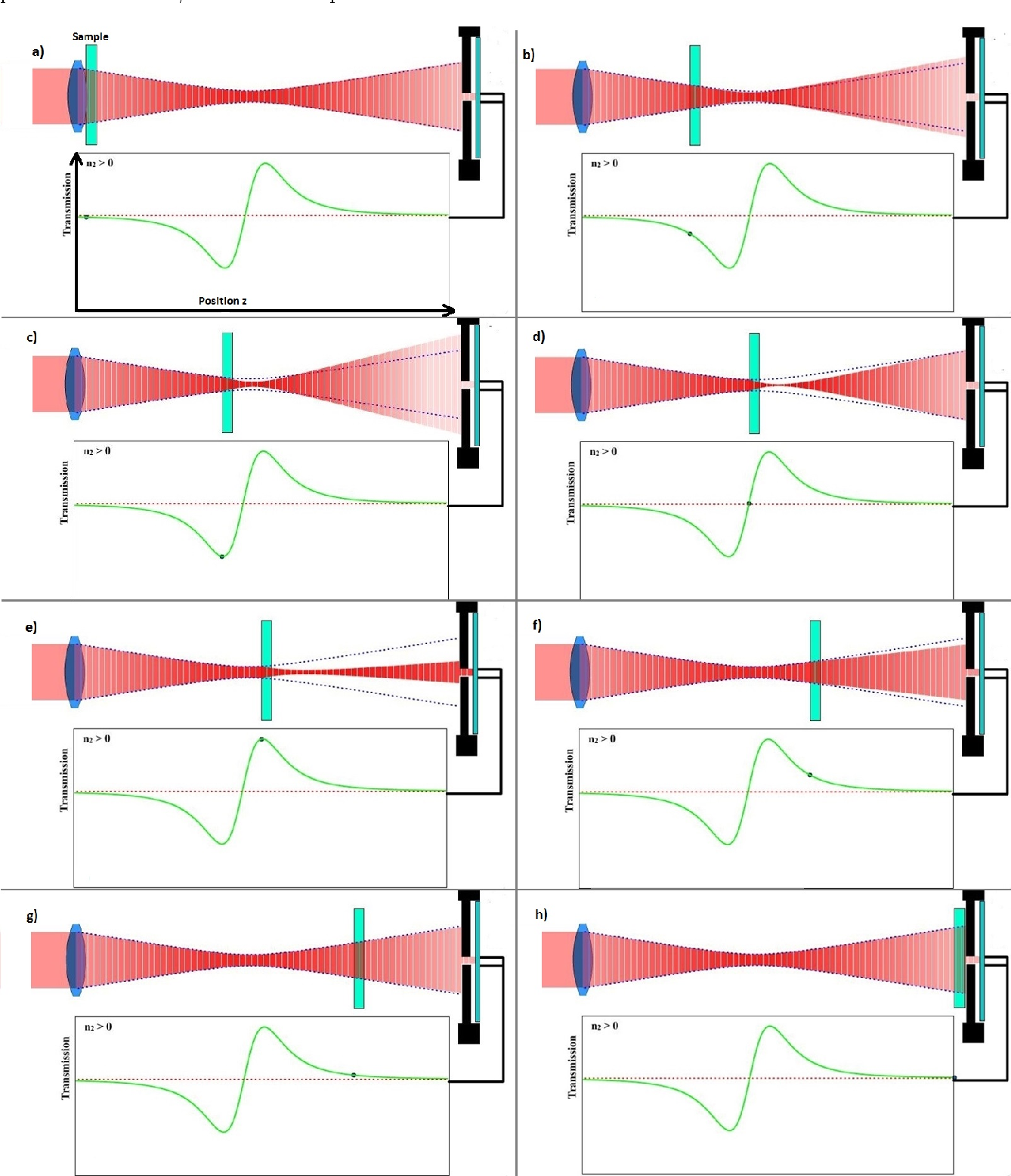
Theoretically when there is no nonlinear absorption the Z-scan curve must be symmetric around the origin of the Z-axis.
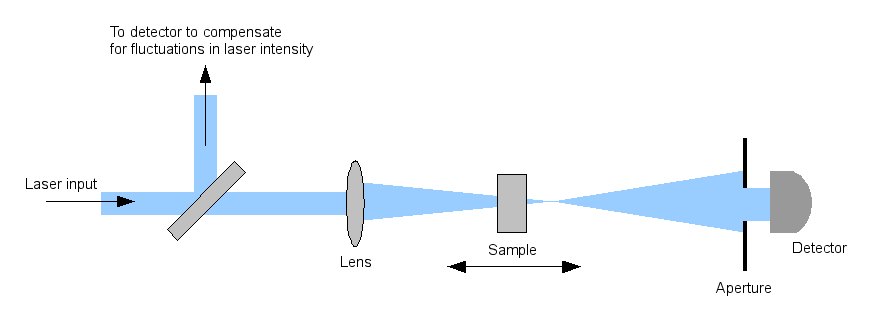
Z-scan technique. The result of measurement mainly depends on light through the sample after a slight variation in the intensity and the tiny change depends on the accuracy of the measurement sensitivity of Z-scan technology. The Z-SCAN Characterization Kit is a simple implementation of the z-scan technique that can be used to characterize optical materials. The Z-scan is a simple technique for measuring the change in phase induced on a laser beam upon propagation through a nonlinear material.
An empirical expression is obtained which allows direct calculation of the. Tophat instead of Gaussian beams are used in Zscan experiments to measure nonlinear optical Kerr coefficients of materials. The nonlinear refractive index of the total protein and albumin were found to vary linearly with concentration.
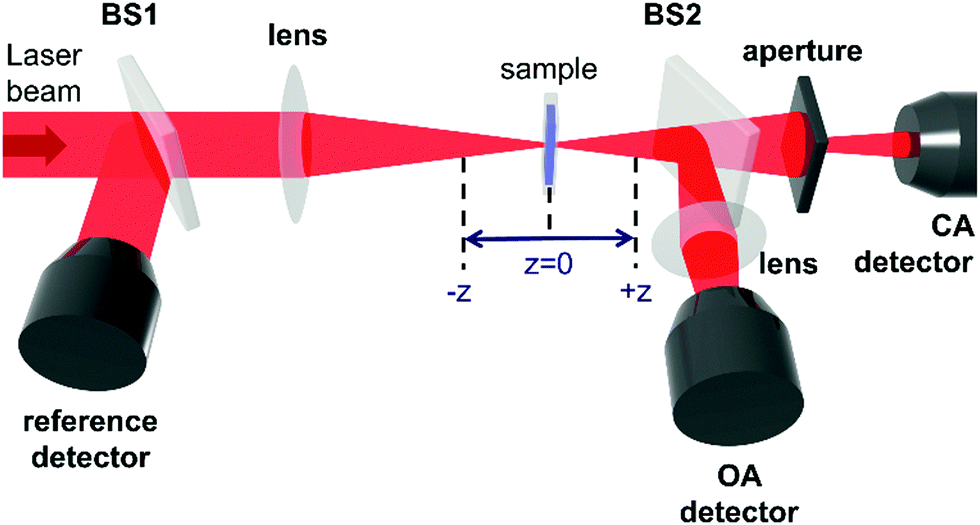
Scientists in the Newport Technology and Applications Center to work together and be compatible with the Spitfire XP Pro. The Z-scan technique is a simple and popular experimental technique to measure intensity dependent non linear susceptibilities of materials. The z-scan technique is performed by translating a sample through the beam waist of a focused beam and then measuring the power transmitted through the sample.
Note that the Z-scan technique is a well-established method for quantitative measurement of the nonlinear absorption NLA and nonlinear refraction NLR 78. The Z-scan technique is proposed by Sheik-Bahae et al 1. All of the optics and mounts in this kit have been certified by our PhD.
In particular nonlinear phase distortions as low as 1500 are readily de-tectable with the present differential z-scan tech-nique. The Z-scan is a simple technique for measuring the change in phase induced on a laser beam upon propagation through a nonlinear material it gives both the sign and magnitude of this phase change ΔΦ which is simply related to the change in index of refraction An. 1 2 In this chapter we first present a brief review of this technique and its various derivatives.
Experimental Technique The experimental setup for the determination of the. The nonlinear optics measurements were performed by using z-scan method with 532 nm wavelength CW NdYAG laser. By using this technique the measurement was made for total pro-tein and albumin.
This method has been widely applied in measurement of the nonlinear optical properties of surface transmittance limited material and opaque material. The Z-scan technique is a popular method for measuring degenerate single frequency optical nonlinearities using a single laser beam. The Z-scan measurement is a technique which helps to determine intrinsic photo-physical properties of photo-activated materials by tightly focusing a single laser beams onto the surface of the material samples.
Essentially a sample of the material under investigation is moved through the focus of a laser beam and the beam radius or the on-axis intensity is measured at some point behind the focus as a. The influence of electric field on the nonlinear optical responses for nematic liquid crystals NLCs doped with nps was considered in different voltages. The Z-scan technique is a method which can rapidly measure both NLA and NLR in solids liquids and liquid solutions.
The Z-SCAN Characterization of Transparent Optical Materials Kit is a simple implementation of the z-scan technique that can be used to characterize relatively thin 5mm optical materials. Hence by calculating the. Z-scan has many possible configurations eg.
The Z-Scan technique is a simple and popular experimental technique used to measure intensity dependent nonlinear susceptibilities of materials. The magnitude of the nonlinear index n 2 of an optical material. The Z-scan technique is proposed by Sheik-Bahae et al 1.
Flash animation based on thin lens aberration free approximation for Z-scan by Mark Fleharty Sheik-Bahae Group UNMMark Fleharty Sheik-Bahae Group UNM. In this method the sample is translated along the axis of a focused. Theoretically when there is no nonlinear absorption the Z-scan curve must be symmetric around the origin of the Z-axis.
Anced z-scan technique we obtain a 5 increase in S N ratio without particular attention being paid to configuration optimization. By using this technique the measurement was made for total protein and albumin. The nonlinear refractive index of the total protein and albumin were found to vary linearly with concentration.
In order to perform reliable measurements it is necessary to carefully characterize and control a number of experimental parameters such as the beam quality the power and temporal characteristics of the laser. In this note only the. The sample is moved along the z direction the laser beam propagation.
1 To whom any correspondence should be addressed. The z-scan measurement technique 1 2 is often used for measuring the strength of the Kerr nonlinearity ie. Hence by calculating the nonlinear refractive index it is possible to measure their concentration.
Z-scan technique Gaussian beam optics ABSTRACT. The laser beam is directed perpendicular to the plane of the sample. We have introduced the dual-arm Z-scan technique as a method to extract small nonlinear refractive signals from solutes of low concentration in the presence of large solvent nonlinearities.
Additionally a Z-scan can also separately determine the change in transmission. A squaraine dye was used to test the sensitivity of the new technique which yielded results consistent with previous data. It gives both the sign and magnitude of this phase change Delta Phi which is simply related to the change in index of refraction.
We review Z-scan and related techniques for the measurement of the nonlinear optical properties of materials. Holmarcs Z-Scan System is a simple implementation of the z-scan technique that can be used to characterize optical materials. Reflection Z-scan technique is to obtain nonlinear refractive index by measuring light reflection coefficient changes caused by the laser beam wavefront aberration.
Z-scan technique is an effective tool for measuring the optical nonlinearity of the materials. Z-scan technique is an effective tool for measuring the optical nonlinearity of the materials.
File Zscandiagram Png Wikipedia
Z Scan


Z Scan System

Z Scan Nonlinear Measurement A Schematic Z Scan Setup For Download Scientific Diagram

Z Scan System
2

Experimental Setup For The Z Scan Technique The Sample Travels Along Download Scientific Diagram

Lens Effect In The Z Scan Technique For The Case N 2 0 A Before Download Scientific Diagram

Open And Closed Aperture Of Z Scan Technique Download Scientific Diagram

6 Z Scan Experimental Arrangement 59 The Z Scan Technique Includes Download Scientific Diagram

9 Z Scan Technique Closed Aperture Order Curves Of Positive And Download Scientific Diagram
Chopper Z Scan Technique For Elliptic Gaussian Beams
Pdf Measurement Of The Nonlinear Refractive Index By Z Scan Technique Semantic Scholar
Nonlinear Optical Properties Upconversion And Lasing In Metal Organic Frameworks Chemical Society Reviews Rsc Publishing Doi 10 1039 C7cs00162b

Posting Komentar untuk "Z-scan Technique"